AI SDRs vs Human SDRs: The Ultimate Comparison for Modern Sales Teams

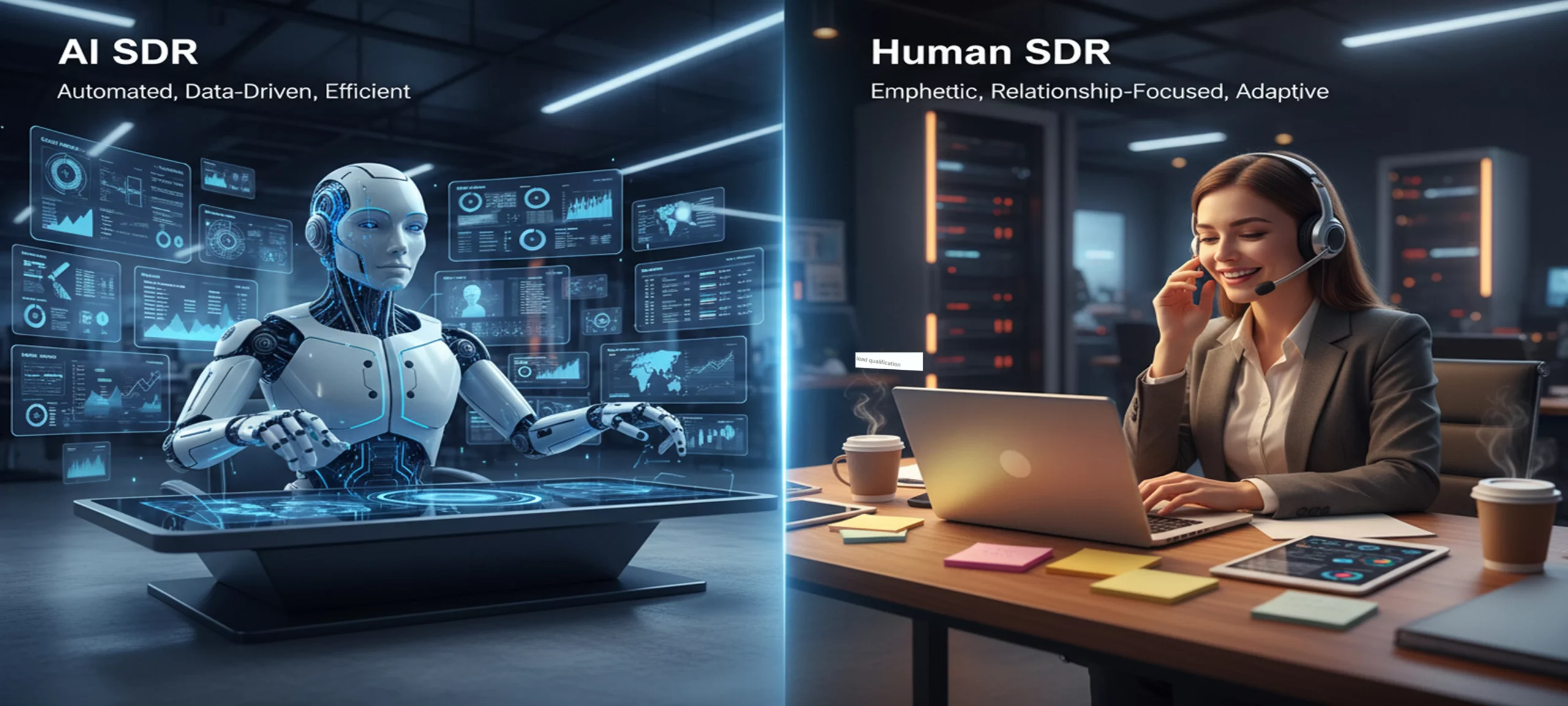
The sales development landscape is experiencing a seismic shift. Companies implementing AI SDRs report 35% higher conversion rates and 60% lower cost-per-lead compared to traditional human-only teams. The debate between AI SDRs vs human SDRs isn’t just about technology adoption—it’s about fundamentally reimagining how sales teams operate in an increasingly competitive market.
Recent data reveals the scope of this transformation. The global sales automation market reached $7.3 billion in 2024, with AI-powered sales development representing the fastest-growing segment. Companies are no longer asking whether to integrate AI into their sales process, but rather how to balance AI SDRs vs human SDRs for maximum effectiveness.
Understanding the AI SDR Revolution
AI SDRs represent a fundamental evolution beyond traditional sales automation tools. While conventional tools handle basic tasks like email scheduling, AI SDRs engage in sophisticated prospect research, personalized outreach creation, and intelligent conversation management that closely mimics human behavior.
The capabilities of modern AI SDRs extend far beyond simple automation:
- Intelligent Prospect Research: AI SDRs analyze thousands of data points to identify ideal prospects and personalization opportunities
- Dynamic Content Creation: Generate personalized emails, LinkedIn messages, and follow-up sequences at scale
- Behavioral Analysis: Track prospect engagement patterns and adjust outreach strategies in real-time
- Multi-Channel Coordination: Seamlessly manage touchpoints across email, social media, and phone calls
This technological sophistication enables AI SDRs to handle complex sales development tasks that previously required human intelligence and creativity.
The Human SDR Advantage: What Technology Can’t Replace
Human SDRs bring irreplaceable qualities that remain crucial for sales success. The nuanced understanding of prospect psychology, ability to build genuine relationships, and creative problem-solving capabilities represent significant advantages in the AI SDRs vs human SDRs comparison.
Key strengths of human SDRs include:
- Emotional Intelligence: Reading between the lines in prospect communications and responding with appropriate empathy
- Complex Relationship Building: Developing trust and rapport through authentic personal connections
- Adaptive Conversation Management: Handling unexpected objections and steering conversations dynamically
- Strategic Account Insights: Understanding complex organizational dynamics and decision-making processes
Human SDRs excel particularly in high-value, complex sales cycles where relationship quality significantly impacts deal outcomes. Their ability to navigate sensitive situations and build long-term partnerships remains unmatched by current AI technology.
Performance Metrics: AI SDRs vs Human SDRs Head-to-Head
The performance comparison between AI SDRs vs human SDRs reveals distinct advantages for each approach across different metrics.
Volume and Efficiency Metrics
AI SDRs demonstrate clear superiority in high-volume activities:
- Daily Outreach Capacity: AI SDRs handle 200-500 personalized touchpoints daily vs. 50-100 for human SDRs
- Response Time: AI SDRs respond to prospect inquiries within minutes vs. hours for human teams
- Follow-up Consistency: 100% follow-up rate for AI SDRs vs. 65-75% for human SDRs
- Multi-Channel Coverage: AI SDRs maintain simultaneous presence across all channels without fatigue
Quality and Conversion Metrics
The quality comparison presents a more nuanced picture:
- Email Open Rates: AI SDRs achieve 22-28% vs. 18-24% for human SDRs through better send-time optimization
- Response Rates: Human SDRs maintain slight advantage at 8-12% vs. 6-10% for AI SDRs in complex scenarios
- Meeting Booking Rates: AI SDRs show 15-20% higher booking rates through persistent, optimized follow-up sequences
- Qualified Lead Conversion: Human SDRs excel in complex qualification scenarios with 25-30% higher accuracy
Cost Analysis: The Economics of AI SDRs vs Human SDRs
The financial implications of choosing between AI SDRs vs human SDRs extend beyond simple salary comparisons to include training, technology, and opportunity costs.
Human SDR Cost Structure
The total cost of human SDRs includes multiple components often overlooked in basic comparisons:
- Base Compensation: Average SDR salary ranges $45,000-$75,000 annually plus commissions
- Benefits and Overhead: Additional 25-35% for healthcare, office space, and administrative costs
- Training and Onboarding: $15,000-$25,000 per SDR for initial training and 3-6 month ramp time
- Management Resources: Significant time investment from sales managers for coaching and performance management
AI SDR Cost Structure
AI SDR implementation involves different cost considerations:
- Platform Licensing: Typically $200-$800 per month per AI SDR depending on feature sophistication
- Integration and Setup: One-time costs of $5,000-$15,000 for platform configuration and workflow integration
- Data and Technology Infrastructure: Ongoing costs for CRM integration, data sources, and technical maintenance
- Human Oversight: Reduced but still necessary management time for AI SDR performance optimization
The break-even point typically occurs within 6-9 months for organizations with consistent lead generation needs exceeding 1,000 monthly prospects.
Hybrid Approach: Combining AI SDRs and Human SDRs
The most successful organizations don’t choose between AI SDRs vs human SDRs, they create synergistic hybrid models that leverage the strengths of both approaches.
Optimal Task Distribution
Effective hybrid models assign responsibilities based on each approach’s comparative advantages:
- AI SDR Responsibilities: Initial prospect research, bulk outreach campaigns, follow-up sequence management, and basic qualification
- Human SDR Responsibilities: Complex conversations, relationship building, strategic account development, and deal closing support
- Collaborative Activities: AI SDRs generate leads and initial interest, human SDRs take over for relationship development and closing
Implementation Framework
Successful hybrid implementation follows a structured approach:
- Phase 1: Deploy AI SDRs for high-volume, low-touch prospect identification and initial outreach
- Phase 2: Integrate human SDRs for qualified lead conversion and relationship development
- Phase 3: Optimize handoff processes between AI and human SDRs for seamless prospect experience
- Phase 4: Continuously analyze performance data to refine task allocation and improve outcomes
This approach typically delivers 40-60% improvement in overall sales development efficiency while maintaining relationship quality standards.
Industry-Specific Considerations in AI SDRs vs Human SDRs
Different industries show varying optimal balances in the AI SDRs vs human SDRs equation based on sales cycle complexity, relationship importance, and regulatory requirements.
High-Volume, Transactional Sales
Industries like SaaS, e-commerce, and digital services benefit significantly from AI SDR emphasis:
- Software as a Service: AI SDRs excel at identifying and qualifying prospects for demo scheduling
- E-commerce Platforms: Automated outreach for merchant acquisition and partner development
- Digital Marketing Services: High-volume lead generation for standardized service offerings
Complex, Relationship-Driven Sales
Industries requiring deep relationship building favor human SDR approaches:
- Enterprise Software: Complex organizational dynamics require human insight and relationship management
- Professional Services: Trust and credibility building essential for consulting and advisory services
- Healthcare Technology: Regulatory sensitivity and relationship importance necessitate human involvement
Emerging Hybrid Opportunities
Many industries are discovering innovative ways to balance AI SDRs vs human SDRs:
- Financial Services: AI SDRs for initial compliance screening, human SDRs for relationship development
- Manufacturing: AI SDRs for supplier outreach, human SDRs for partnership negotiations
- Real Estate Technology: AI SDRs for lead qualification, human SDRs for complex deal management
Technology Integration: Making AI SDRs and Human SDRs Work Together
Successful integration of AI SDRs vs human SDRs requires sophisticated technology orchestration that enables seamless collaboration and data sharing.
CRM and Data Management
Unified data management ensures both AI and human SDRs operate from consistent, current information:
- Real-Time Data Synchronization: Instant updates across all systems when prospects take action
- Interaction History Tracking: Complete visibility into all AI and human touchpoints
- Lead Scoring Integration: Dynamic scoring that considers both AI analysis and human insights
- Performance Analytics: Comprehensive reporting on AI SDR vs human SDR contribution to pipeline
Communication Workflow Optimization
Effective workflows prevent prospect confusion and ensure consistent messaging:
- Handoff Protocols: Clear triggers for transitioning prospects from AI to human SDRs
- Message Continuity: AI SDRs maintain conversation context when human SDRs take over
- Escalation Procedures: Automatic routing of complex situations to appropriate human SDRs
- Quality Assurance: Regular auditing of AI SDR communications for brand compliance
Measuring Success: KPIs for AI SDRs vs Human SDRs
Comprehensive performance measurement requires metrics that capture both efficiency gains and relationship quality maintenance.
Efficiency Metrics
Track operational improvements across the AI SDRs vs human SDRs spectrum:
- Cost Per Qualified Lead: Compare acquisition costs between AI and human-generated leads
- Time to First Response: Measure speed of initial prospect engagement
- Pipeline Velocity: Track how quickly leads progress through qualification stages
- Resource Utilization: Monitor human SDR time allocation and AI SDR capacity usage
Quality Metrics
Ensure relationship building and prospect satisfaction remain strong:
- Prospect Satisfaction Scores: Survey prospects about their experience with AI vs human interactions
- Deal Size and Close Rates: Compare ultimate revenue outcomes from different lead sources
- Customer Lifetime Value: Assess long-term relationship quality from AI-initiated vs human-initiated contacts
- Brand Perception Impact: Monitor how AI SDR interactions affect overall brand perception
Strategic Metrics
Evaluate broader business impact of AI SDRs vs human SDRs implementation:
- Market Coverage Expansion: Measure ability to reach previously untapped prospect segments
- Competitive Response Time: Track speed of response to market opportunities
- Scalability Achievement: Assess growth in prospect engagement without proportional resource increase
- Innovation Impact: Monitor new opportunities discovered through AI analysis capabilities
Future Trends: The Evolution of AI SDRs vs Human SDRs
The trajectory of AI SDRs vs human SDRs will continue evolving as technology advances and buyer expectations change. Understanding these trends helps organizations prepare for the next phase of sales development evolution.
Emerging technological capabilities will reshape the comparison:
- Conversational AI Advancement: More sophisticated natural language processing enabling human-like conversations
- Predictive Analytics Integration: AI SDRs will predict optimal engagement timing and messaging with increasing accuracy
- Cross-Platform Intelligence: AI SDRs will synthesize data from multiple sources for enhanced personalization
- Emotional Intelligence Development: AI systems will better recognize and respond to emotional cues in prospect communications
The human role will simultaneously evolve toward higher-value activities:
- Strategic Account Planning: Human SDRs will focus increasingly on complex, high-value opportunities
- AI Training and Optimization: Human expertise will guide AI SDR learning and performance improvement
- Relationship Architecture: Humans will design and manage multi-stakeholder relationship strategies
- Creative Problem Solving: Human SDRs will handle unique situations requiring innovative approaches
Implementing Your AI SDRs vs Human SDRs Strategy
Successful implementation requires careful planning that considers organizational readiness, technology infrastructure, and change management requirements.
Assessment Phase
Begin with comprehensive evaluation of current sales development effectiveness:
- Performance Baseline Establishment: Document current human SDR metrics and costs
- Technology Infrastructure Audit: Assess CRM capabilities and integration readiness
- Process Documentation: Map existing sales development workflows and handoff points
- Team Skills Assessment: Evaluate current team capabilities and training needs
Pilot Program Design
Implement AI SDRs vs human SDRs comparison through controlled testing:
- Segmented Approach: Test AI SDRs on specific prospect segments or geographic regions
- Performance Benchmarks: Establish clear success criteria for AI SDR performance
- Feedback Mechanisms: Create systems for continuous improvement based on prospect and team feedback
- Scalability Planning: Design processes that can expand successful pilots across the organization
Transform Your Sales Development with Isometrik AI
Navigating the AI SDRs vs human SDRs decision requires sophisticated technology that seamlessly integrates with human expertise. Isometrik AI’s sales development solutions are specifically designed to optimize the balance between automation efficiency and human relationship building.
Our platform provides the capabilities essential for successful AI SDR implementation:
- Intelligent Lead Scoring: AI-powered analysis that identifies the highest-value prospects for human SDR attention
- Automated Personalization: Dynamic content creation that maintains brand voice while scaling outreach efforts
- Seamless CRM Integration: Complete data synchronization that keeps both AI and human SDRs working from current information
- Performance Analytics: Comprehensive reporting that tracks AI SDR vs human SDR contribution to pipeline development
The future of sales development lies not in choosing between AI SDRs vs human SDRs, but in optimizing their collaboration. Organizations that master this balance will achieve sustainable competitive advantages in lead generation, prospect engagement, and revenue growth.
Ready to optimize your sales development approach? Discover how Isometrik AI‘s solutions can help you implement the perfect balance of AI SDRs and human SDRs for maximum pipeline impact and relationship quality.