AI Use Cases in Supply Chain: Transforming Logistics Operations in 2026

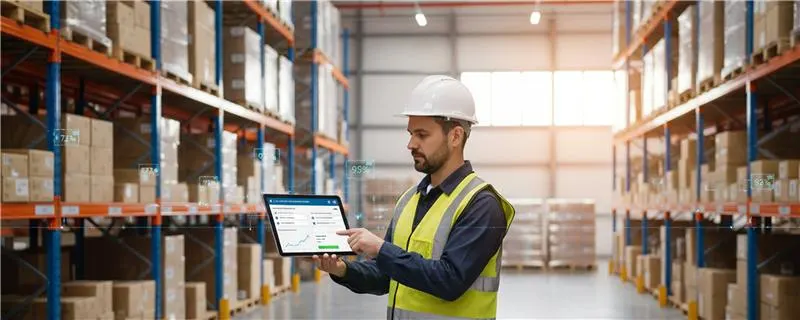
Supply chain disruptions cost U.S. businesses $184 billion annually, with delays and inefficiencies eroding profit margins across industries. Organizations are turning to artificial intelligence to address these challenges through measurable operational improvements.
AI use cases in supply chain management now extend beyond theoretical applications to proven implementations delivering quantifiable returns. According to recent industry analysis, 40% of supply chain organizations are investing in GenAIpositioning it as a strategic priority rather than an experimental initiative.
Understanding AI in Supply Chain Management: Technology and Business Impact
AI in supply chain management refers to ML algorithms, predictive analytics, and automation technologies that optimize logistics operations. These systems analyze historical data, real-time variables, and external market conditions to enhance decision-making accuracy.
ML enables pattern recognition across millions of data points. NLP extracts actionable insights from unstructured data sources. Computer vision automates quality control and inventory tracking processes.
The business impact manifests through three primary mechanisms:
- Operational cost reduction through automated processes and optimized resource allocation
- Risk mitigation via predictive analytics identifying potential disruptions before they occur
- Revenue protection by maintaining inventory availability and delivery commitments
- Competitive advantage through superior service levels and faster market responsiveness
- Data-driven decision-making replacing intuition-based planning methodologies
U.S. manufacturers implementing AI-powered demand forecasting report 15-30% reductions in excess inventory costs. Transportation companies utilizing route optimization algorithms achieve 10-20% fuel savings annually.
Critical AI Use Cases Driving Supply Chain Efficiency
Demand Forecasting and Inventory Optimization
Predictive analytics engines process point-of-sale data, seasonal trends, economic indicators, and consumer behavior patterns. Organizations can reduce forecasting errors by up to 50% compared to traditional statistical methods. Walmart’s AI systems analyze over 100 variables to predict demand at individual store locations.
Inventory optimization algorithms determine reorder points, safety stock levels, and distribution center allocation. These systems consider lead times, supplier reliability metrics, and demand volatility. Manufacturing firms report 20-35% decreases in inventory holding costs post-implementation.
Autonomous Logistics and Route Optimization
Integrated logistics automation platforms coordinate transportation networks using real-time data. AI systems factor in traffic conditions, weather forecasts, delivery windows, and vehicle capacity constraints. UPS’s ORION system processes 250 million routing scenarios daily, saving 100 million miles and 10 million gallons of fuel annually. These operational cost reductions through AI translate directly to bottom-line improvements.
Warehouse automation leverages computer vision for package sorting and robotic systems for picking operations. Amazon’s fulfillment centers employ over 520,000 autonomous mobile robots handling inventory movement. Human workers focus on exception handling and quality verification tasks. Throughput increases of 40-60% are standard outcomes in automated facilities.
Predictive Maintenance and Asset Management
IoT sensors monitor equipment performance across supply chain assets including vehicles, machinery, and material handling equipment. ML models identify anomaly patterns indicating impending failures. GE’s Predix platform analyzes turbine data to prevent unplanned downtime in logistics operations.
The financial impact extends beyond repair cost avoidance. Unplanned downtime carries cascading penalties including missed deliveries, expedited shipping charges, and customer satisfaction erosion. Predictive maintenance converts these variable costs into planned maintenance schedules.
Supplier Risk Management and Quality Control
AI systems aggregate data from financial reports, news sources, weather services, and geopolitical databases. These platforms provide proactive risk management capabilities for supply disruptions. Cisco’s supply chain risk management solution monitors 28,000 suppliers across 100 countries continuously. Alerts trigger contingency plans before disruptions materialize into operational impacts.
Computer vision inspects product quality at production speeds exceeding human capability. BMW employs AI-powered visual inspection systems detecting micro-defects in painted surfaces. Defect rates decrease while inspection throughput increases 3-5x versus manual processes. Quality escapes to customers drop below 10 parts per million in advanced implementations.
| AI Technology | Supply Chain Function | Measurable Business Impact | Implementation Complexity |
| Machine Learning | Demand Forecasting | 25-50% forecast accuracy improvement | Medium |
| Computer Vision | Quality Inspection | 60-80% defect detection increase | High |
| Natural Language Processing | Supplier Communication | 30-40% processing time reduction | Low |
| Predictive Analytics | Maintenance Scheduling | 35-45% downtime reduction | Medium |
| Optimization Algorithms | Route Planning | 15-25% logistics cost savings | Medium |
Industry-Specific Applications: From E-commerce to Healthcare Logistics
E-commerce and Retail Operations
E-commerce platforms process millions of transactions requiring precise inventory positioning across distribution networks. Logistics automation software enables real-time inventory visibility and automated replenishment triggers. Zara’s AI systems adjust inventory allocation based on sales velocity at 2,200 global stores. Products move from warehouses to high-demand locations within 48 hours.
Personalization engines predict individual customer preferences, optimizing inventory mix at regional distribution centers. Amazon’s anticipatory shipping algorithm move products closer to predicted buyers before purchase orders finalize.

Healthcare and Pharmaceutical Supply Chains
Temperature-sensitive medications and biological materials require strict cold chain compliance. IoT sensors combined with AI monitoring systems ensure continuous temperature verification throughout transportation. Deviations trigger immediate corrective actions preventing product spoilage. Pharmaceutical companies report 90%+ reduction in temperature excursion incidents.
Hospital supply chains utilize AI for surgical supply kit optimization and expiration date management. Predictive analytics forecast procedure volumes, ensuring critical supplies remain available without excess inventory. Healthcare systems achieve 15-25% reductions in supply chain costs through these applications.
Manufacturing and Industrial Sectors
End-to-end supply chain automation coordinates raw material procurement, production scheduling, and finished goods distribution. Tesla’s integrated systems adjust production rates based on real-time component availability and customer order patterns.
Industrial distributors employ AI for parts obsolescence prediction and alternative sourcing recommendations. Systems analyze product lifecycle data, manufacturer announcements, and market availability trends. Organizations reduce obsolete inventory write-offs by 40-60% through proactive management.
For organizations seeking to implement these capabilities, AI-powered logistics solutions provide integrated platforms addressing multiple use cases simultaneously. These enterprise systems deliver faster time-to-value compared to point solution approaches.
Quantifiable Results: ROI Data from Leading Organizations
Lenovo implemented AI-based demand sensing technology achieving 20% surplus inventory reduction and 25% forecast accuracy improvement. The manufacturer freed $50 million in working capital within 18 months of deployment. Implementation costs totaled $3.2 million, delivering 15.6x ROI in the first two years.
DHL’s AI-optimized logistics network generates $150 million in annual savings through route optimization and warehouse automation. The company reduced on-time delivery failures by 15% while decreasing operational costs by 11%.
Coca-Cola’s AI-driven demand planning reduces stockouts by 30% while cutting excess inventory by 25% across global markets. Real-time analytics incorporating weather data, event schedules, and social media sentiment improve local demand predictions.
| Use Case | Average Cost Savings | Time to Measurable ROI | Enterprise Adoption Rate |
| Demand Forecasting | 20-35% inventory reduction | 6-12 months | 67% |
| Route Optimization | 15-25% logistics costs | 3-9 months | 54% |
| Predictive Maintenance | 30-40% maintenance costs | 12-18 months | 43% |
| Quality Inspection | 25-40% defect costs | 9-15 months | 38% |
| Supplier Risk Management | 10-20% disruption costs | 12-24 months | 31% |
The global AI supply chain market projected at $20 billion by 2028 reflects enterprise confidence in these ROI profiles. Organizations prioritize use cases delivering both short-term wins and long-term strategic value.
Strategic Implementation Framework for Enterprise Adoption
Successful AI adoption in supply chains starts with a strong data foundation. AI models rely on clean, connected data pulled from ERP, WMS, TMS, and external systems. Many organizations underestimate this step, yet poor data quality remains the leading cause of AI project failure.
Data readiness priorities include:
- Integrating siloed operational systems into a unified data layer
- Cleaning historical datasets to improve forecasting accuracy
- Standardizing data formats across logistics and procurement tools
- Allocating 40–50% of implementation budgets to data preparation
Pilot programs help organizations experiment with minimal risk while building confidence internally. Starting with a focused use case and measurable KPIs allows teams to validate ROI before scaling across operations.
Best practices for pilot execution:
- Select use cases with clear business impact and success metrics
- Define a realistic 6–12 month implementation window
- Use controlled environments to test AI performance
- Expand gradually once value is demonstrated
For example, Coca-Cola initially applied AI to demand forecasting for a single product category before scaling globally — a strategy that balanced learning with measurable impact.
Strong governance ensures AI initiatives remain aligned with operational goals. Cross-functional collaboration between IT, procurement, logistics, and leadership is essential to prevent silos and delays.
Governance elements that improve adoption:
- Executive sponsorship to drive strategic alignment
- Cross-functional steering committees for faster decision-making
- Weekly progress reviews to address blockers early
- Shared KPIs across technology and business teams
Organizations with structured governance consistently report smoother deployments and higher AI success rates.
Change management is equally critical, as AI adoption reshapes workflows and team responsibilities. Rather than replacing workers, most supply chain AI solutions augment human decision-making and automate repetitive tasks.
Workforce readiness initiatives should include:
- Training programs on AI system monitoring and exception handling
- Communication strategies to reduce automation anxiety
- Role redesign focused on analytical and supervisory responsibilities
- Upskilling initiatives aligned with digital transformation goals
Companies investing in workforce development often achieve up to 50% higher adoption rates.
Vendor selection also plays a decisive role in long-term success. The right partner should support integration, scalability, and industry-specific requirements while minimizing operational disruption.
Key vendor evaluation criteria:
- Seamless integration with existing enterprise systems
- Scalability to support multiple supply chain use cases
- Proven industry expertise and customer references
- Proof-of-concept testing using real operational data
- Preference for platforms offering multiple capabilities over isolated point solutions
A structured implementation framework combining data readiness, pilot learning, governance, workforce alignment, and careful vendor selection significantly increases the likelihood of successful enterprise AI adoption in supply chain operations.
Measuring Business Value: KPIs and Performance Metrics
Supply chain AI investments require rigorous performance tracking across financial, operational, and strategic dimensions. Financial metrics include total cost of ownership, implementation cost recovery period, and net present value of benefits. Operational KPIs measure forecast accuracy improvements, inventory turnover increases, and on-time delivery performance.
Forecast accuracy metrics compare predicted versus actual demand at SKU and location levels. Leading organizations target 85-90% accuracy rates for high-volume products. Inventory turnover improvements reflect working capital efficiency gains. Manufacturers aim for 20-30% increases in turns following AI implementation.
| Performance Category | Key Metric | Industry Benchmark | AI-Enabled Target |
| Financial | Working Capital | 45-60 days | 30-40 days |
| Operational | Forecast Accuracy | 70-75% | 85-90% |
| Service | On-Time Delivery | 92-95% | 97-99% |
| Efficiency | Warehouse Productivity | 100 units/hour | 160-200 units/hour |
| Quality | Defect Rate | 500 PPM | <100 PPM |
Customer satisfaction scores provide ultimate validation of AI supply chain investments. Reliable delivery commitments and product availability drive Net Promoter Score improvements. Organizations correlate AI adoption with 10-15 point NPS increases across customer segments.
Bottomline – AI Use Cases in Supply Chain
ROI calculations should account for both tangible savings and strategic benefits. Tangible returns include reduced inventory carrying costs, lower transportation expenses, and decreased labor requirements. Strategic value encompasses improved market responsiveness, enhanced customer retention, and competitive differentiation. Comprehensive ROI models capture both dimensions for accurate investment justification.
AI use cases in supply chain management deliver measurable value when organizations approach implementation strategically. Data infrastructure, pilot programs, cross-functional alignment, and rigorous performance measurement enable successful adoption. The competitive landscape increasingly favors enterprises leveraging AI to optimize supply chain operations and enhance customer service levels.