Multi Agent AI Systems: The Future of Intelligent Business Operations

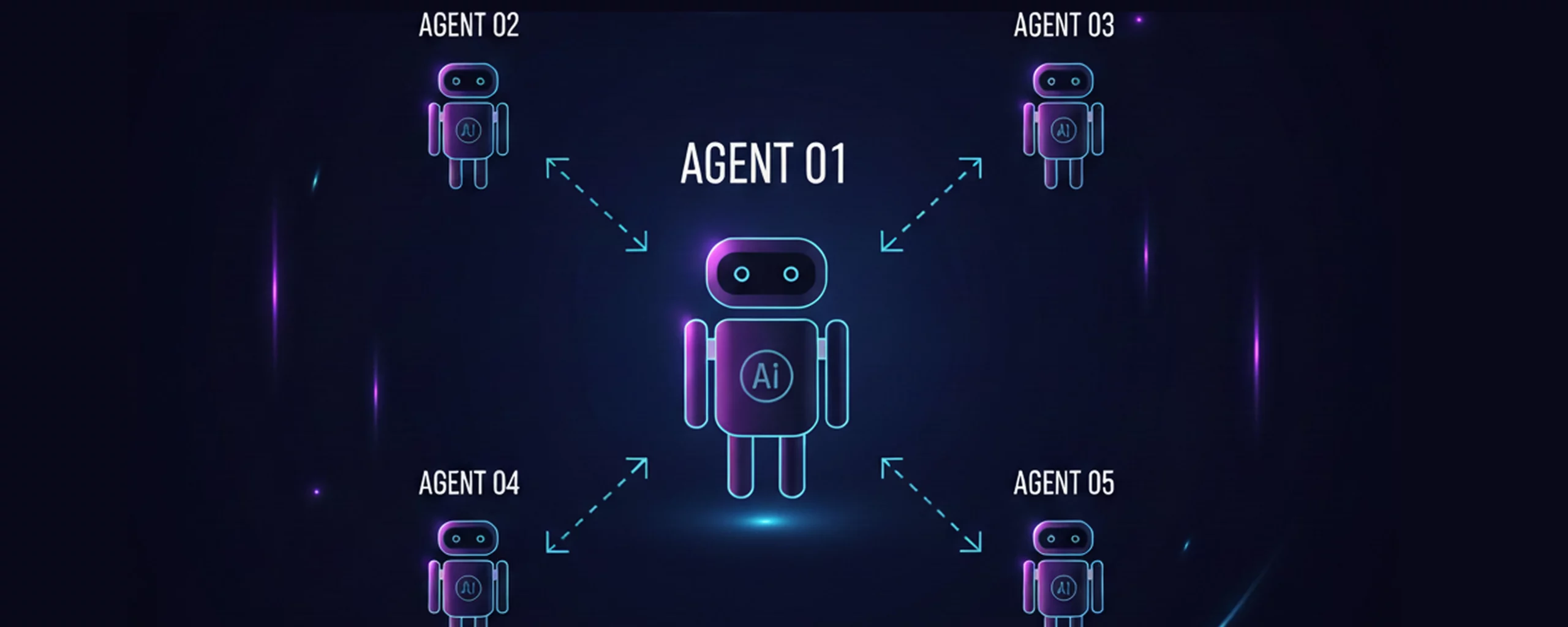
The artificial intelligence landscape has evolved beyond single-purpose tools to sophisticated multi agent AI systems that work collaboratively to solve complex business challenges. These networks of specialized AI agents represent a paradigm shift from traditional automation, offering unprecedented capabilities in decision-making, problem-solving, and operational efficiency.
The global multi-agent systems market is projected to reach $184.8 billion by 2034, reflecting explosive growth driven by businesses recognizing the transformative potential of collaborative AI. With most businesses seeing ROI between 200-400% within 12-24 months of implementation, multi agent AI systems have become essential for organizations seeking competitive advantage.
This comprehensive guide explores how multi agent AI systems revolutionize business operations, deliver exceptional ROI, and enable organizations to tackle challenges that single AI agents cannot handle alone.
Understanding Multi Agent AI Systems
Multi agent AI systems consist of multiple autonomous AI agents that interact, collaborate, and coordinate with each other within a shared environment to achieve individual or collective goals. Unlike single-agent systems that operate in isolation, these collaborative networks leverage distributed intelligence, enhanced fault tolerance, and scalable architectures.
Each agent in the system possesses specialized capabilities and expertise, similar to having a team of human specialists working together on a complex project. These agents communicate through standardized protocols that enable them to share information, request assistance, and coordinate actions seamlessly.
According to recent analysis, about 25% of organizations using generative AI plan to implement autonomous AI agents as part of their operational workflows, highlighting the growing recognition of multi-agent systems’ potential.
Key Advantages of Multi Agent AI Systems
Distributed Intelligence and Problem Solving
Multi agent AI systems excel at complex problem-solving by distributing tasks among specialized agents. Each agent focuses on specific aspects of a challenge while contributing to the overall solution. This approach enables organizations to tackle problems that are too complex or multifaceted for single AI agents.
For example, in financial services, one agent might analyze market trends while another assesses risk factors, and a third evaluates regulatory compliance—all working simultaneously to provide comprehensive investment recommendations.
Enhanced Scalability and Flexibility
Multi-agent architectures offer superior scalability compared to single-agent systems. Organizations can add or remove agents based on workload demands without disrupting the entire system. This flexibility makes multi agent AI systems particularly valuable for businesses with fluctuating requirements or seasonal variations.
The manufacturing sector leads with 28.7% of the total multi-agent system market share, as these systems provide the decentralized decision-making needed to adapt to real-time changes in demand, supply, or equipment status.
Improved Fault Tolerance and Reliability
When one agent in a multi-agent system encounters issues or fails, other agents can compensate, ensuring system continuity. This distributed approach significantly reduces single points of failure and improves overall system reliability—a critical advantage for mission-critical business operations.
Real-Time Collaboration and Decision Making
Multi agent AI systems enable decentralized decision-making and real-time agent collaboration, resulting in more reliable and scalable solutions in domains like supply chain management, autonomous systems, and smart operations. Agents can respond to changing conditions instantly without waiting for centralized approval or coordination.
Business Applications and Use Cases
Supply Chain Management and Logistics
Multi-robot coordination represents 34.6% of the application base in multi-agent systems, reflecting growing use in warehouse automation and logistics operations. Multi-agent frameworks enable fleets of robots to share situational awareness, divide tasks efficiently, and operate safely in shared environments.
These systems optimize inventory management, demand forecasting, and distribution planning by having specialized agents handle different aspects of the supply chain simultaneously. One agent might monitor supplier performance while another optimizes shipping routes and a third manages inventory levels.
Financial Services and Trading
NUMERAI represents an innovative example where multiple AI agents collaborate on financial market prediction. Data scientists worldwide submit models that predict financial market trends, and these agents interact within a collaborative framework, contributing to overall performance and accuracy.
Financial services show the highest success rates, with an 89% successful implementation rate for multi agent AI systems. These systems handle fraud detection, risk assessment, algorithmic trading, and compliance monitoring simultaneously.
Manufacturing and Industrial Operations
In manufacturing environments, multi agent AI systems coordinate autonomous production lines, predictive maintenance, and resource allocation within smart factories. As factories embrace Industry 4.0 standards, intelligent agents provide the decentralized decision-making needed for real-time adaptation.
These systems help improve throughput, reduce downtime, and enhance operational visibility by having specialized agents manage different aspects of production while coordinating their activities for optimal efficiency.
Healthcare and Patient Management
Healthcare organizations deploy multi agent AI systems for patient monitoring, treatment planning, and administrative coordination. Different agents can monitor vital signs, analyze medical data, coordinate care teams, and manage scheduling—all while ensuring seamless communication and care continuity.
Customer Service and Support
Multi agent AI systems transform customer service by deploying specialized agents for different types of inquiries. One agent might handle basic questions while another manages complex technical issues, and a third escalates critical problems to human specialists when necessary.
Implementation Strategies and Best Practices
Optimal System Architecture
Most successful business implementations use between 5 and 25 agents, with the optimal number depending on process complexity and organizational scope. Organizations typically need cloud infrastructure capable of handling 10,000+ API calls per hour and integration capabilities with existing business systems.
Phased Implementation Approach
Phase 1: Pilot Implementation Start with a single business process or department to prove value and refine the approach. This allows teams to learn system capabilities while minimizing risk.
Phase 2: Horizontal Expansion Expand successful use cases to similar processes across different departments, leveraging lessons learned from the pilot phase.
Phase 3: Vertical Integration Implement comprehensive multi-agent solutions that span multiple business functions and enable end-to-end process automation.
Technical Infrastructure Requirements
Organizations need dedicated IT staff with AI/ML expertise and robust cloud infrastructure to support multi-agent systems. Implementation timelines typically range from 6-18 months, depending on system complexity, organizational size, and integration requirements with existing infrastructure.
Measuring ROI and Business Impact
Financial Returns
Most businesses see ROI between 200-400% within 12-24 months of implementation, with average annual savings of $2.1-3.7 million depending on system scope and industry application. These returns come from reduced operational costs, improved efficiency, and enhanced decision-making capabilities.
Early enterprise deployments of multi agent AI systems have yielded up to 50% efficiency improvements in functions like customer service, sales, and HR operations, with organizations reporting significant cost reductions and productivity gains.
Operational Improvements
Multi agent AI systems deliver measurable operational benefits including:
- Faster Decision Making: Real-time collaboration enables rapid response to changing conditions
- Improved Accuracy: Distributed intelligence reduces errors through multiple validation points
- Enhanced Productivity: Automated coordination eliminates manual handoffs and delays
- Better Resource Utilization: Optimized task distribution maximizes system efficiency
Scalability Benefits
Organizations can scale multi-agent systems more efficiently than traditional automation approaches. Adding new capabilities or handling increased workload requires adding specialized agents rather than rebuilding entire systems.
Overcoming Implementation Challenges
Integration Complexity
Integrating multi agent AI systems with existing business systems requires careful planning and robust APIs. Choose platforms that offer pre-built connectors for common enterprise systems and ensure proper data flow between agents and existing applications.
Change Management
Staff training and change management are critical for successful multi-agent system adoption. Organizations should invest in comprehensive training programs and clearly communicate how these systems enhance rather than replace human capabilities.
Data Management and Security
Multi agent AI systems require access to diverse data sources while maintaining security and compliance. Implement proper data governance, access controls, and monitoring systems to ensure responsible AI deployment.
Future Trends and Innovations
Autonomous Agent Evolution
AI agents are evolving from task-specific bots to autonomous, multi-modal collaborators across business functions. Agents are increasingly assisting complex workflows in domains including operations, human resources, and support due to their increasing reasoning, orchestration, and real-time interaction capabilities.
Multi-Agent Orchestration
The rise of multi-agent orchestration platforms enables better coordination between diverse agent types. These platforms provide standardized communication protocols and centralized management while maintaining the distributed benefits of multi-agent architectures.
Industry-Specific Solutions
Specialized multi agent AI systems are emerging for specific industries, with pre-configured agents designed for common industry workflows and challenges. This approach reduces implementation time and improves system effectiveness.
Advanced Multi-Agent Capabilities
Self-Healing and Adaptive Systems
Advanced multi agent AI systems incorporate self-healing capabilities that automatically detect and resolve issues without human intervention. These systems can reconfigure themselves based on changing conditions or performance requirements.
Collaborative Learning
Multi-agent systems that learn from each other’s experiences create more intelligent and adaptive solutions over time. Agents share insights and improvements, enabling the entire system to evolve and optimize performance continuously.
Cross-Domain Integration
Future multi agent AI systems will seamlessly integrate across different business domains, enabling end-to-end automation that spans multiple departments and functions within organizations.
How Isometrik AI Enables Multi-Agent Success
Isometrik AI’s multi-agent system platform provides the foundation for building sophisticated collaborative AI solutions. Our platform offers:
- Pre-Built Agent Templates: Industry-specific agents that accelerate implementation and reduce development time
- Seamless Integration: APIs and connectors that enable smooth integration with existing business systems
- Scalable Architecture: Cloud-native infrastructure that grows with your organization
- Advanced Orchestration: Intelligent coordination systems that optimize agent collaboration
Our multi agent AI systems help organizations achieve measurable business outcomes through intelligent automation that adapts to changing requirements and scales with growth.
Ready to Transform Your Operations with Multi-Agent AI?
Multi agent AI systems represent the next evolution in business automation, offering capabilities that single-agent systems cannot match. The combination of distributed intelligence, enhanced scalability, and real-time collaboration creates unprecedented opportunities for operational efficiency and competitive advantage.
The question isn’t whether multi agent AI systems will transform your industry—it’s how quickly you can implement them to gain competitive advantage. Organizations that act now position themselves to lead in an increasingly AI-driven marketplace.
Transform your business operations with Isometrik AI‘s proven multi-agent system solutions. Contact our AI specialists today to discover how collaborative AI can revolutionize your organization, reduce operational costs, and deliver sustainable competitive advantage through intelligent automation.