Product Catalog Enrichment: The Ultimate Guide to Ecommerce Success

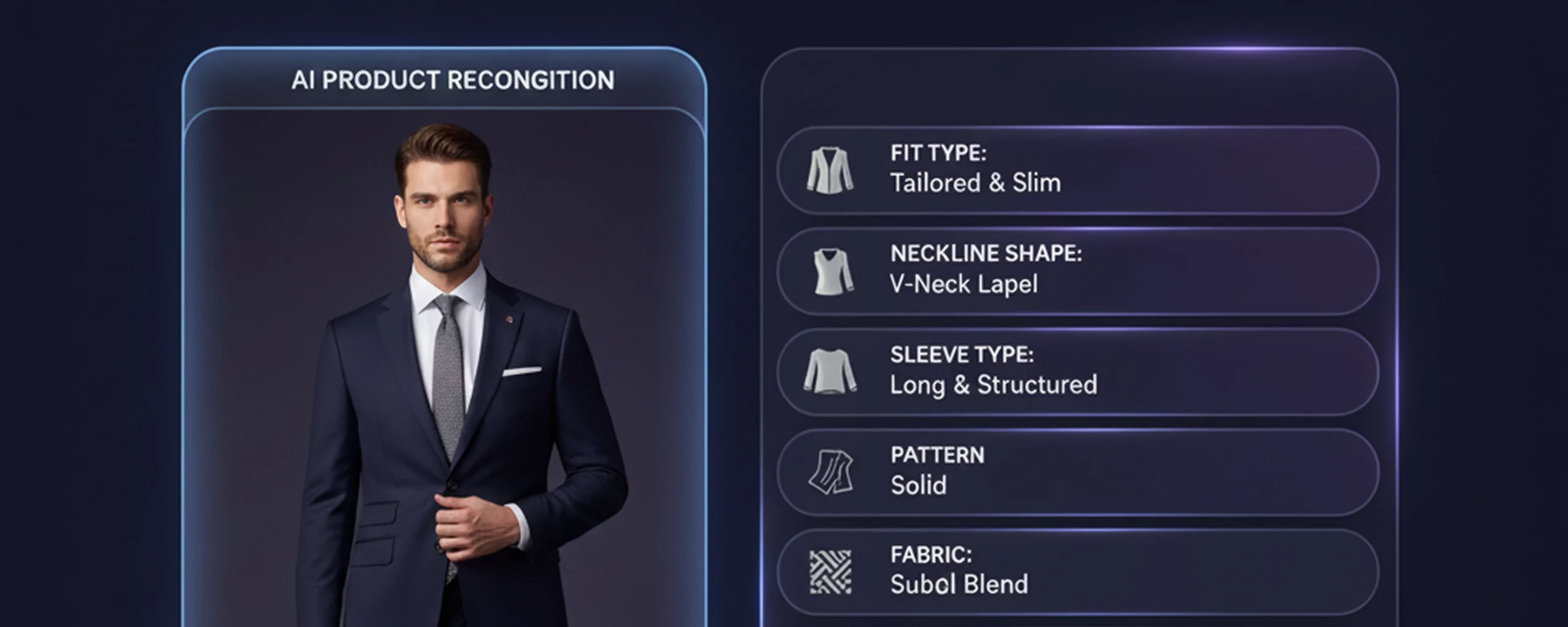
The difference between thriving and merely surviving often comes down to the quality and completeness of your product data. While 87% of online shoppers consider product descriptions crucial when making buying decisions, many businesses struggle with incomplete, inconsistent, or outdated product information that directly impacts their bottom line.
Product catalog enrichment has emerged as the definitive solution for ecommerce businesses seeking to maximize conversions, reduce returns, and scale operations efficiently. Recent case studies show enriched products delivering +7.6% CTR lift, +6.32% ROAS growth, higher conversions, and an impressive 16.4x ROI.
This comprehensive guide explores how product catalog enrichment transforms ecommerce operations, delivers exceptional ROI, and enables businesses to compete effectively in an increasingly crowded marketplace.
Understanding Product Catalog Enrichment
Product catalog enrichment is the process of enhancing existing product data with additional attributes, descriptions, specifications, images, and metadata to create comprehensive, accurate, and compelling product listings. This goes far beyond basic product information to include detailed specifications, usage contexts, styling attributes, and consumer-relevant features.
Modern product catalog enrichment leverages artificial intelligence and machine learning to automatically extract, standardize, and enhance product data from multiple sources. AI-powered systems can process thousands of products in minutes, extracting rich attributes like silhouette, color, material composition, and compatibility insights across entire catalogs.
The process involves data collection from various sources, intelligent attribute extraction, standardization across categories, quality validation, and continuous updates to maintain accuracy and relevance. This systematic approach ensures product information meets both customer expectations and channel requirements.
The Business Impact of Product Catalog Enrichment
Dramatic Conversion Rate Improvements
Enriched product catalogs deliver measurable improvements in customer engagement and sales performance. Research shows that accurate, complete product information significantly increases conversion rates, with properly enriched products achieving 7.6% higher click-through rates and 6.32% ROAS growth compared to basic listings.
Complete product descriptions and accurate specifications reduce customer uncertainty and increase purchase confidence. When shoppers find comprehensive information that answers their questions, they’re more likely to complete purchases rather than abandon their carts to research alternatives.
Substantial Return Rate Reduction
One of the most significant benefits of product catalog enrichment is the reduction in product returns. According to client data, features such as product completeness monitoring, combined with automated enrichment rules and validation, ensure shoppers are more informed prior to purchase, which can decrease return rates by more than 20%.
This improvement stems from providing accurate product dimensions, detailed descriptions, usage guidelines, and compatibility information that helps customers make informed decisions. When customers receive exactly what they expected based on product information, satisfaction increases and returns decrease dramatically.
Enhanced Search Visibility and Discoverability
Enriched product data significantly improves search performance across multiple channels. Products with comprehensive attributes and optimized descriptions perform better in organic search results, marketplace algorithms, and internal site search functionality.
AI-driven search experiences increasingly rely on structured product data to understand and rank products appropriately. Enriched catalogs enable better product discovery through improved attribute filtering, semantic search capabilities, and personalized recommendations.
Key Components of Product Catalog Enrichment
Comprehensive Attribute Enhancement
Product catalog enrichment involves adding detailed attributes that matter to customers. For fashion products, this includes fit types, fabric composition, style details, and occasion suitability. For electronics, it covers technical specifications, compatibility information, and performance metrics.
AI-powered enrichment systems can automatically extract these attributes from product images, descriptions, and manufacturer specifications. Advanced algorithms identify color variations, material types, style elements, and functional features that enhance product searchability and appeal.
Visual Content Optimization
Enrichment extends beyond text to include high-quality images, videos, and multimedia content. This involves standardizing image formats, adding alternative text for accessibility, and creating visual content that highlights key product features.
Computer vision technology can analyze product images to extract additional attributes automatically, identifying visual elements like patterns, textures, and design details that enhance searchability and customer understanding.
Standardized Taxonomies and Categories
Effective product catalog enrichment requires consistent categorization and attribute standardization across product ranges. This involves mapping diverse product data to unified taxonomies that enable consistent filtering, searching, and comparison across catalogs.
Standardized taxonomies ensure that similar products from different suppliers or brands can be compared easily, improving customer experience and reducing confusion from inconsistent naming or categorization.
Multi-Channel Optimization
Product catalog enrichment optimizes data for different sales channels and platforms. Each marketplace and platform has specific requirements for product information, and enrichment ensures compliance while maintaining consistency across all touchpoints.
This includes optimizing product titles for search algorithms, formatting descriptions for mobile viewing, and ensuring all required attributes are populated for marketplace approval and visibility.
Implementation Strategies for Maximum Impact
AI-Powered Automation
Modern product catalog enrichment leverages artificial intelligence to automate labor-intensive processes. AI systems can process vast amounts of product data, extract relevant attributes, and standardize information across thousands of SKUs in minutes rather than weeks.
Machine learning algorithms continuously improve their accuracy by learning from user feedback and market data. This ensures enrichment quality improves over time while reducing manual oversight requirements.
Data Source Integration
Successful enrichment requires integrating data from multiple sources including supplier feeds, manufacturer specifications, customer reviews, and market intelligence. This comprehensive approach ensures enriched catalogs contain the most relevant and accurate information available.
Integration capabilities should include APIs for real-time data synchronization, batch processing for large catalog updates, and validation rules to maintain data quality across all sources.
Quality Assurance and Validation
Implementing robust quality assurance processes ensures enriched data meets accuracy and completeness standards. This includes automated validation rules, manual review workflows for high-value products, and continuous monitoring to identify and correct data inconsistencies.
Quality assurance should cover attribute accuracy, image quality, description readability, and compliance with channel requirements to ensure enriched catalogs deliver optimal performance across all platforms.
Continuous Optimization
Product catalog enrichment is an ongoing process that requires regular updates and optimization. Market trends, customer preferences, and platform requirements evolve continuously, necessitating dynamic enrichment strategies.
Implementing feedback loops from customer behavior, search performance, and conversion metrics enables continuous improvement of enrichment strategies and ensures catalogs remain relevant and effective over time.
Measuring Product Catalog Enrichment ROI
Direct Revenue Impact
Calculate ROI by measuring revenue increases from improved conversion rates, higher average order values, and expanded market reach. Boston Proper’s implementation demonstrated measurable results with enriched products delivering higher conversions, improved AOV, and 16.4x ROI.
Track metrics including:
- Conversion rate improvements across product categories
- Average order value changes for enriched versus non-enriched products
- Revenue attribution to enhanced product discovery and search performance
Operational Cost Savings
Product catalog enrichment delivers significant operational efficiencies by automating manual data management tasks. Businesses report 80% time savings on catalog creation and 5x faster time-to-market for new products through automated enrichment processes.
Cost savings include:
- Reduced manual data entry and content creation time
- Lower error correction costs through automated validation
- Decreased customer service inquiries due to complete product information
Return Rate Reduction Value
Calculate the financial impact of reduced return rates through improved product information accuracy. A 20% reduction in returns translates directly to cost savings from reduced processing, restocking, and customer service expenses.
Return reduction benefits include:
- Lower logistics and processing costs for returned items
- Reduced inventory write-offs from damaged returns
- Improved customer satisfaction and lifetime value
Time-to-Market Acceleration
Enriched catalogs enable faster product launches and market expansion. By automating data preparation and ensuring compliance with multiple channel requirements, businesses can launch products across more channels in less time.
Time-to-market improvements include:
- Faster product onboarding and catalog integration
- Reduced time for marketplace approval and listing optimization
- Accelerated expansion into new geographic markets and sales channels
Industry-Specific Applications
Fashion and Apparel
Fashion retailers leverage product catalog enrichment to add detailed style attributes, fabric information, fit guidance, and styling context. This enables better product discovery through intuitive filtering and helps customers find items that match their preferences and needs.
Enrichment includes season relevance, occasion suitability, style compatibility, and trend alignment that improve both search performance and customer satisfaction.
Electronics and Technology
Technology products require detailed technical specifications, compatibility information, and feature comparisons. Enrichment ensures customers have access to comprehensive product details that enable informed purchasing decisions.
This includes processor specifications, memory capacity, operating system compatibility, and connectivity options that are crucial for technology purchasing decisions.
Home and Garden
Home improvement and garden products benefit from enrichment that includes usage instructions, care guidelines, compatibility information, and styling suggestions. This helps customers understand how products fit into their specific projects and environments.
Enrichment covers dimensions, materials, installation requirements, and maintenance needs that reduce post-purchase confusion and returns.
Health and Beauty
Beauty and personal care products require enrichment with ingredient information, usage instructions, skin type compatibility, and benefit descriptions. This helps customers select products appropriate for their specific needs and preferences.
Detailed ingredient lists, application methods, and expected results help customers make informed choices while reducing the likelihood of allergic reactions or product dissatisfaction.
Advanced Enrichment Technologies
Natural Language Processing
NLP technologies enable automatic extraction of product attributes from unstructured text sources like product descriptions, reviews, and specifications. This allows systems to identify and standardize product features from diverse data sources.
Advanced NLP can identify sentiment, extract usage contexts, and understand customer language patterns to create more relevant and searchable product descriptions.
Computer Vision and Image Analysis
Computer vision technologies automatically analyze product images to extract visual attributes like color, pattern, style, and material. This enables consistent attribute tagging across visual content and improves search accuracy.
Image analysis can identify product features that might be missed in text descriptions, ensuring comprehensive attribute coverage for visual products.
Machine Learning Optimization
Machine learning algorithms continuously optimize enrichment strategies based on performance data, customer behavior, and market trends. This ensures enrichment remains relevant and effective as conditions change.
ML systems can predict which attributes are most important for specific product categories and customer segments, enabling targeted enrichment that maximizes impact.
Overcoming Implementation Challenges
Data Quality and Consistency
Maintaining high-quality, consistent data across large catalogs requires robust validation and standardization processes. Implementing automated quality checks and manual review workflows ensures enriched data meets accuracy standards.
Address data quality challenges through source validation, duplicate detection, and continuous monitoring to maintain catalog integrity over time.
Integration Complexity
Integrating enrichment systems with existing ecommerce platforms, PIM systems, and marketplaces requires careful planning and technical expertise. Choose solutions that offer pre-built connectors and flexible APIs for seamless integration.
Work with experienced implementation partners who understand both the technical requirements and business implications of catalog enrichment projects.
Scale Management
Managing enrichment across thousands or millions of SKUs requires scalable systems and processes. Implement automation wherever possible while maintaining quality controls for high-value or complex products.
Develop prioritization frameworks that focus enrichment efforts on products with the highest potential impact and business value.
Ready to Transform Your Product Catalog?
Product catalog enrichment represents a fundamental shift in how successful ecommerce businesses approach product data management. The evidence is overwhelming: businesses implementing comprehensive enrichment strategies achieve significant improvements in conversion rates, customer satisfaction, and operational efficiency.
The combination of AI-powered automation, comprehensive data integration, and continuous optimization creates unprecedented opportunities for ecommerce success. Organizations that embrace product catalog enrichment position themselves for sustained growth and competitive advantage in an increasingly crowded marketplace.
Transform your ecommerce performance with Isometrik AI’s proven product catalog enrichment solutions. Contact our ecommerce specialists today to discover how intelligent product data optimization can revolutionize your catalog, increase conversions, and drive sustainable business growth through enhanced customer experiences.